
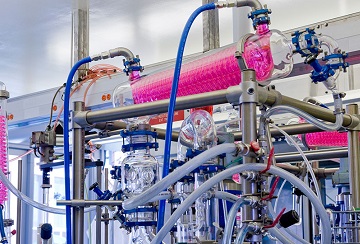

Biologic drugs are a major force in the biotechnology and pharmaceutical industry with more than 200 biologics benefiting millions of patients worldwide. This video gives an overview of biologic medicines; how they differ from other medicines, how they’re manufactured, and their availability around the world.
Biotechnology is, in some ways, as old as human history. Using yeast to make bread rise is an example of biotechnology. Using living organisms and biological processes to make something useful.
It expanded into medical uses in the 1940s, with the introduction of penicillin. But modern biotechnology really just began in the 1970s.
In the same way penicillin greatly impacted countless lives over half a century ago, today’s biologic medicines are significant to patients with serious illnesses, such as rheumatoid arthritis, cancer, rare blood disorders, multiple sclerosis, osteoporosis, diabetes and HIV/AIDS.
Today, biologic drugs are a major force in the biotechnology pharmaceutical industry, with more than 200 biologics benefitting millions of patients worldwide.
But what are biologics? And how do they differ from other medicines?
Other medicines, like traditional chemical medicines, are typically contained in a pill, tablet or capsule. Biologics, in contrast, are given by injection or infusion.
Biologics are made in living cells and most of today’s biologics come from biotechnology. Cells whose DNA have been genetically engineered to produce a protein that is then used as a medicine.
This requires introducing the genetic information, DNA, that tells the cell how to produce the protein. Once the cell has been engineered, it is used to establish a cell line—thousands of copies of this original cell.
This unique cell line, known as the master cell bank, is then frozen and stored for making all future products. Every vial had its beginnings in the master cell bank, so each dose of medicine was made by cells that have identical DNA.
So, what are biosimilars then? And how do they differ from other medicines, including originator biologics?
Biosimilars are biologic drugs that are highly similar to the originator product, but not identical. They are not generic drugs. Generic drugs are copies of brand name drugs and have the same active pharmaceutical ingredient. They are traditionally small molecule drugs and identical copies can be made my chemists in a lab.
Biosimilars, on the other hand, are biologic drugs that are highly similar to a particular originator biologic, but not the same. And therefore, not identical.
This is because they come from a different cell line. It’s virtually impossible to make identical copies of a biologic, unless you have access to the master cell bank and know the exact process used for manufacturing. So, biosimilars are potential therapeutic alternatives, not generic biologics.
And when it comes to biologics, both originator and biosimilars, the manufacturing process matters. The production of biologic medicines requires a high level of monitoring and testing throughout the process to ensure the quality and consistency in the final product.
The process must be tightly controlled within established ranges every time. There are typically around 250 tests performed in the manufacturing process of a biologic, compared with around 50 tests for a small molecule drug. It is this rigorous commitment to quality that helps ensure that each dose is both effective and safe for patients. And this is why manufacturing really matters.
In a nutshell, a biologic drug and a biosimilar are both derived from unique DNA, different cell lines and exclusive manufacturing processes.
Each drugs’ manufacturing process is highly controlled, according to its own proprietary recipe, and even minor changes can impact how the medicines works in the body. This commitment to manufacturing excellence is key to ensuring quality products, and of course, patient safety.
And because sometimes there can be side effects to a medicine, it is important that a post-approval safety monitoring system is in place, that accurately and promptly traces a patient adverse event to a particular product, manufacturer and lot number. It just makes sense if you track where, when and how all biologic medicines are manufactured and dispensed.
Biosimilars are now becoming available all around the world, which means more treatment options for patients and potential cost-savings.
Both originator biologics and biosimilars present valuable treatment options for patients. Physicians, in consultation with their patients, should retain the decision-making role in the choice of which drug is most appropriate for the patient and the condition being treated, since physicians know their patients best.
It is important that patient safety and patient choice remain paramount when it comes to biologics and biosimilars.